Panevėžys Local History Museum
The Panevėžys Local History Museum offers a vivid journey through the city’s past, presenting Panevėžys not just as an industrial centre but as a place shaped by merchants, craftsmen, educators and cultural innovators. Founded in 1985, the museum has grown into one of Lithuania’s most engaging regional institutions, known for its carefully curated exhibitions and strong storytelling. Inside, visitors encounter a rich collection of artefacts spanning archaeology, ethnography and urban history. One of the most interesting sections explores the city’s rapid development in the late 19th and early 20th centuries, illustrated through shop signs, trade tools and photographs that capture the rise of local industry. The interwar period is brought to life through household interiors, fashion items and personal belongings that reveal how Panevėžys residents lived during a time of cultural optimism. A highlight is the exhibition dedicated to the city’s Jewish community, once a vital part of Panevėžys life. Archival documents, ritual objects and family stories preserve a heritage nearly erased during the Second World War. The museum also displays unique pieces of folk art, traditional ceramics and regional textiles, offering insight into the identity of Aukštaitija.
Panevėžys Lithuania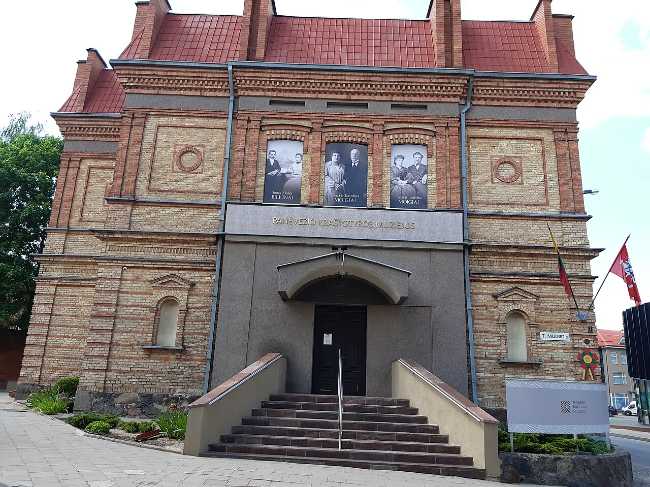
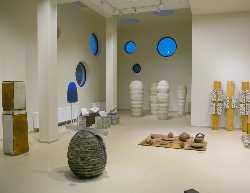
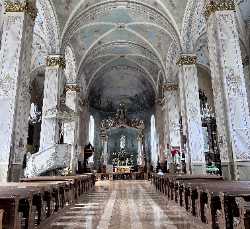
The Panevėžys Local History Museum is located in the very center of Panevėžys, Lithuania’s fourth-largest city, at Vasario 16-osios Street 23. It is housed in the historic Moigiai Family House, once the home of wealthy city nobility. The museum opened in 1939 with 2,000 items and today presents the city’s history through the exhibition “Dialogues of Epochs,” featuring artifacts from different periods of Panevėžys’s development. Nearby, the main attractions are all within easy walking distance. The museum is just steps from Laisvės aikštė (Freedom Square), the heart of the city, known as the “singing square” where the Brass Orchestra “Garsas” often plays live music and where craft workshops and art galleries are concentrated. Close by you will find the Church of St. Peter and St. Paul, the main cathedral of Panevėžys, and the Senvagė scenic promenade along the old riverbed of the Nevėžis River, which is the city’s main place for walking and relaxation. The Key Tree sculpture, a popular symbol of Panevėžys, is also nearby, as is the Panevėžys Civic Art Gallery, which displays ceramic works and other art from the region. For theatre lovers, the Juozas Miltinis Drama Theatre, one of Lithuania’s most famous theatres, is easily accessible in the city center.
 Gallery
 Museum
 Cathedral
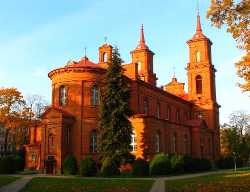 Church
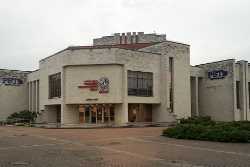 Cultural Centre
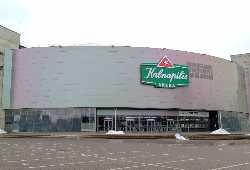 Arena
Arena