Cathedral of Christ the King
The Cathedral of Christ the King is the spiritual heart of Panevėžys and one of Lithuania’s most distinctive interwar churches. Completed in 1933, it was the first cathedral in the country built after the restoration of independence in 1918, symbolising a confident new era for the young state. Architect Rytis Steikūnas designed it in a restrained Neo‑Romanesque style, giving the building its characteristic symmetry, rounded arches and powerful vertical lines. Inside, the cathedral feels bright and spacious, with a high vaulted nave that draws the eye toward the main altar. The altar itself is a highlight: a monumental composition featuring Christ the King, reflecting the cathedral’s dedication and the period’s strong emphasis on national and spiritual renewal. Visitors will also notice the elegant side altars, each decorated with expressive sculptures and paintings by prominent Lithuanian artists of the early 20th century. The cathedral’s stained‑glass windows are among its most interesting features, illustrating biblical scenes in a style that blends traditional iconography with modernist influences. The organ loft houses a large instrument used for concerts that fill the interior with resonant sound. Beneath the church, the crypt contains memorials to local clergy who played key roles in shaping Panevėžys’ religious life.
Panevėžys Lithuania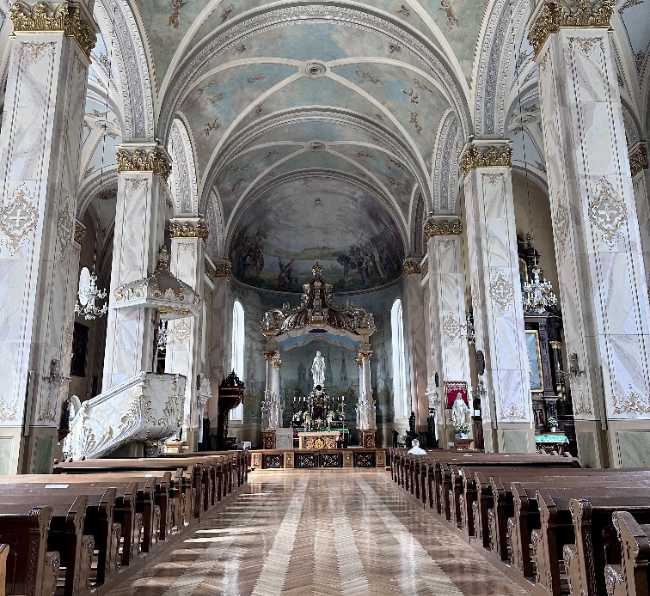
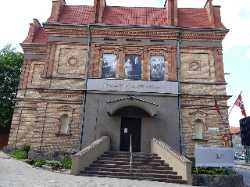
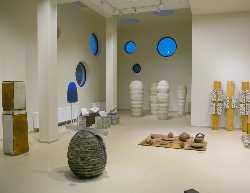
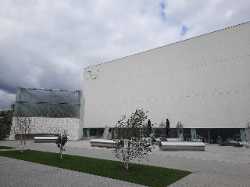
The Cathedral of Christ the King is the main Roman Catholic cathedral in Panevėžys, Lithuania, and the seat of the Diocese of Panevėžys. It is located at Katedros Square 1, right in the city center, on a prominent square that gives the cathedral its name. This is the largest church in Panevėžys and one of its most architecturally striking buildings. Nearby attractions are all within easy walking distance. Just steps away is Laisvės aikštė (Freedom Square), the city’s “singing square,” where the Brass Orchestra “Garsas” often plays live music and where craft workshops and art galleries are concentrated. A short walk leads to the Senvagě scenic promenade along the old riverbed of the Nevėžis River, the city’s main place for walking and relaxation, as well as Culture and Leisure Park and Skaistakalnis Park. Also close by are the Juozas Miltinis Drama Theatre, one of Lithuania’s most famous theatres, the Narrow Gauge Railway Museum, the Panevėžys Local Lore Museum (famous for its world-insect collection), the Panevėžys Civic Art Gallery with its ceramic art courtyard, and the Stasys Eidrigevičius Museum in a modern building. The Church of St. Peter and St. Paul, which marks the symbolic beginning of Panevėžys, is also nearby.
 Museum
 Gallery
 Museum
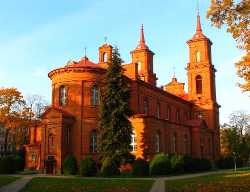 Church
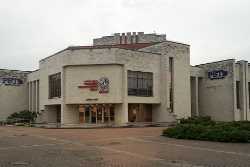 Cultural Centre
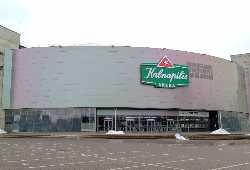 Arena
Arena