The Ironsmiths' Tower
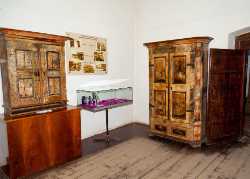
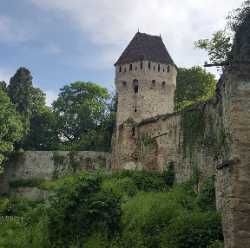
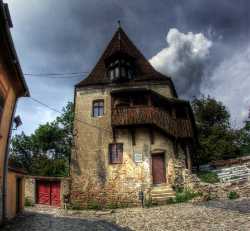
The Ironsmiths’ Tower is one of Sighișoara’s most evocative defensive structures, standing near the citadel’s northern edge where craftsmen once guarded the walls. Maintained by the Ironsmiths’ Guild, it reflects their dual role as artisans and protectors. Its current form dates largely to the 17th century, after earlier fortifications were strengthened to withstand more powerful firearms. The tower’s compact shape and thick masonry show how medieval builders adapted to changing military needs. Inside, the atmosphere is unmistakably martial. Narrow embrasures pierce the walls, offering views of the lower town and reminding visitors how defenders monitored approaching threats. The wooden floors and beams, reconstructed after the great fire of 1676, preserve the tower’s original layout. Exhibits often highlight tools and weapons associated with the guild—iron spikes, forging implements, and early gun barrels that demonstrate the craftsmanship behind Sighișoara’s defenses. One of the tower’s most interesting features is its connection to the old bastion behind it. Together they formed a layered defensive system, allowing guards to control one of the citadel’s most vulnerable approaches. Walking through the passageway feels like stepping into a functional military corridor rather than a museum.
Sighișoara Romania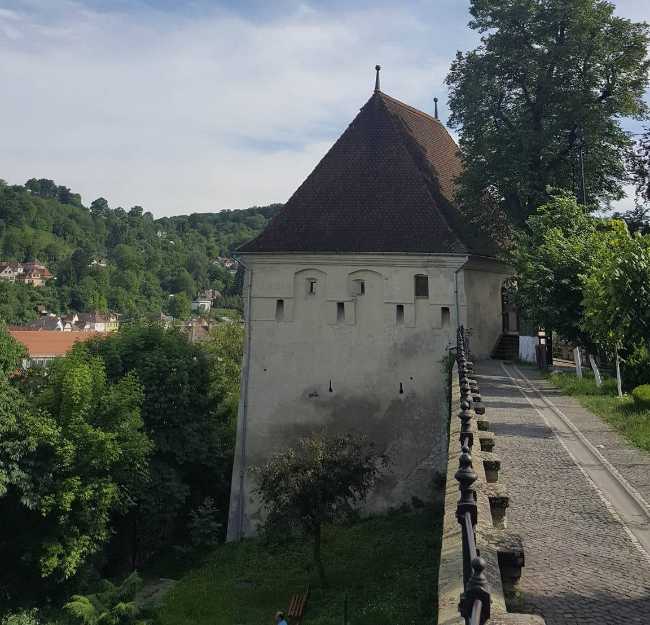
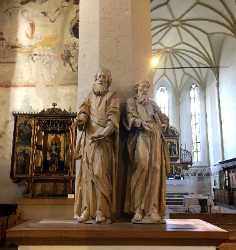
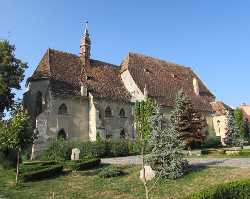
The Ironsmiths’ Tower, or Turnul Fierarilor, stands just behind the Monastery Church on the eastern side of Sighișoara’s medieval citadel. Unlike the Clock Tower, it’s quieter and often open to visitors, with a small exhibition of iron pieces and historical displays inside. Climbing the tower rewards you with views over the citadel’s rooftops and the surrounding Lower Town. You’re in the heart of the UNESCO-listed Historic Centre, so major landmarks are all around. Steps away is the Monastery Church, a Gothic building from the 13th century with Baroque interior elements and a bronze baptismal font. Walk a minute to reach the Clock Tower, home to the Sighișoara History Museum and the citadel’s main gate, offering panoramic views from its balcony. Nearby, Piața Cetății, the Citadel Square, is lined with colorful 16th-century burgher houses, cafes, and craft shops. Also close are Vlad Dracul House, the alleged birthplace of Vlad the Impaler, the Church of the Dominican Monastery, and other guild towers like the Tailors’ Tower, Butchers’ Tower, Ropemakers’ Tower, and Tinsmiths’ Tower. From here you can follow the cobbled streets to the Covered Staircase, a 164-step wooden passage leading up to the Church on the Hill, its Gothic frescoes, and the Saxon cemetery. The Medieval Weapon Museum, Torture Museum, Venetian House, and House with the Deer Antler are all within a few minutes’ walk.
 Museum
 Fortress
 Historical Landmark
 Church
 Church
 Church
 Historical Landmark
 Historical Landmark