Sighișoara Citadel
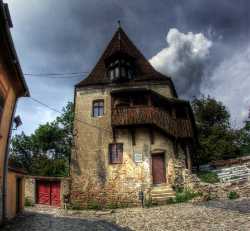
Sighișoara Citadel is one of Europe’s best‑preserved medieval fortresses, a living museum where daily life unfolds inside 13th‑century walls. Built by Transylvanian Saxons as both a home and a defensive stronghold, it remains uniquely inhabited: around 150 people still live within its ramparts, giving the citadel an atmosphere that feels authentic rather than staged. Inside, every corner reveals a story. The cobbled streets follow the original medieval layout, leading to guild houses marked by colourful facades and carved stone details. The Scholar’s Stairs, a covered wooden passage from 1642, is one of the citadel’s most charming features; it was designed to help students reach the hilltop school even in harsh winters. Nearby stands the Church on the Hill, whose interior preserves Gothic fresco fragments and a beautifully carved choir stall. The citadel’s towers are another highlight. Each was maintained by a different guild—Tailors, Tinsmiths, Ropemakers—and their shapes reflect the pride of the craftsmen who defended them. The Clock Tower, home to the History Museum, offers panoramic views and houses the famous rotating figurines symbolising virtues and times of day.
Sighișoara Romania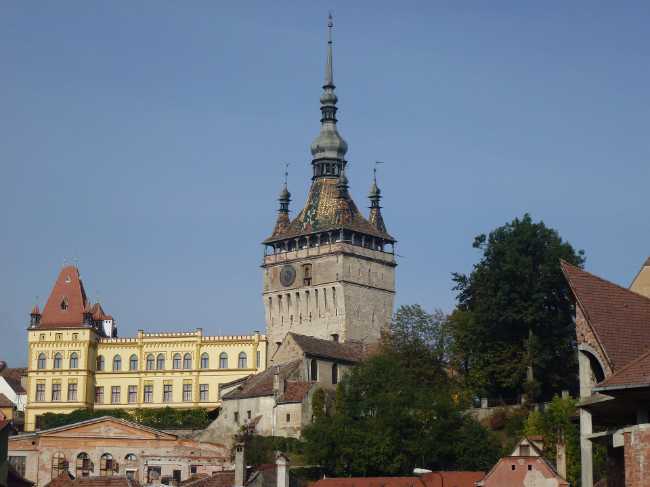
Sighișoara Citadel is the historic center of Sighișoara, located on a hilltop above the Târnava Mare River in Mureș County, Transylvania. Founded by Transylvanian Saxon settlers in the 12th century, it remains one of Europe’s best-preserved inhabited medieval citadels and is a UNESCO World Heritage Site. You enter through the landmark Clock Tower, built in the 14th century, which houses the Sighișoara History Museum and offers panoramic views from its balcony. Inside the citadel, everything is walkable. Just off Piața Cetății, the main square, you’ll find Vlad Dracul House, the alleged birthplace of Vlad the Impaler, now a restaurant and museum. Nearby are the Church of the Dominican Monastery, the Medieval Weapon Museum, the Torture Museum, and the House with the Deer Antler. Climb the 164-step Covered Staircase, a wooden passage from 1642, to reach the School Hill, the Gothic Church on the Hill with 15th-century frescoes, and the Saxon cemetery. Nine of the original fourteen defensive towers still stand, including the Tailors’ Tower, Butchers’ Tower, Tinsmiths’ Tower, and Ropemakers’ Tower, each built and maintained by a different guild. The streets are filled with cafes, artisan shops, and guesthouses in restored medieval buildings. Just outside the citadel walls are the Lower Town, the Orthodox Cathedral, and the Hermann Oberth Square.
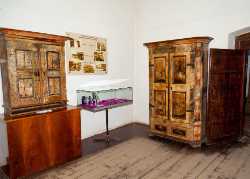 Museum
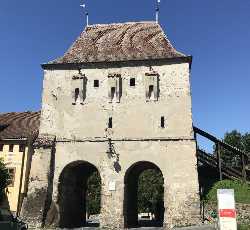 Historical Landmark
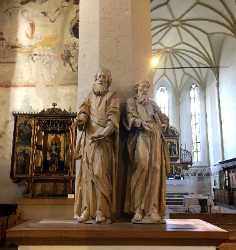 Church
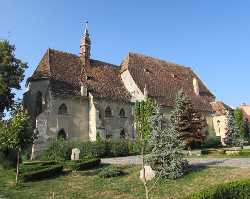 Church
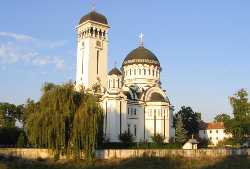 Church
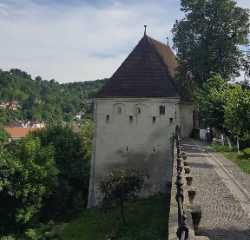 Historical Landmark
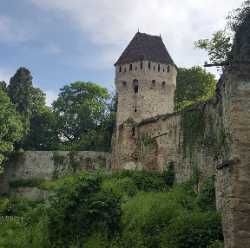 Historical Landmark
 Historical Landmark