Budva
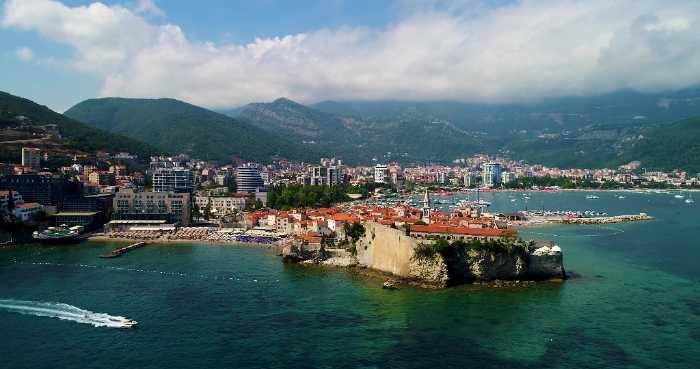
Budva is one of the oldest coastal towns on the Adriatic Sea and one of Montenegro’s most popular tourist destinations. Known for its medieval Old Town, sandy beaches, and historic monuments, Budva combines ancient history with a lively Mediterranean atmosphere. The town has more than 2,500 years of history, with influences from Greek, Roman, Venetian, and Austro-Hungarian periods. The heart of Budva is the Old Town of Budva (Stari Grad Budva), a beautifully preserved medieval settlement surrounded by stone walls and located on a small peninsula. Narrow streets, old squares, churches, and historic buildings create a unique atmosphere. One of the most important landmarks is the Citadel of Budva, a medieval fortress built as part of the town’s defensive system. The Citadel offers impressive views of the Adriatic Sea and the surrounding coastline. Budva is also home to several important museums and cultural institutions. The Museum of the City of Budva is located inside the Old Town and presents archaeological discoveries, historical artefacts, and ethnographic collections that tell the story of the region from ancient times to the modern era. The Maritime Museum of Budva focuses on the town’s long connection with the sea, navigation, and Adriatic maritime traditions. The Archaeological Museum of Budva displays ancient artefacts, including items from the Greek and Roman periods discovered in the area. Among Budva’s most significant religious monuments is the Cathedral of Saint John the Baptist, located in the Old Town. Built on the foundations of earlier churches, this Roman Catholic cathedral is known for its historic architecture, bell tower, and valuable religious artwork. Another important landmark is the Church of Saint Mary in Punta, one of the oldest churches in Budva, dating back to the 9th century. Visitors can also explore the Church of the Holy Trinity, a beautiful Orthodox church built in the 19th century, and the Budva City Walls, which surround much of the Old Town and provide a glimpse into the town’s medieval past. Nearby, the Ballet Dancer Statue (Ballerina Statue) has become one of Budva’s most photographed symbols, standing on a rock near Mogren Beach. With its combination of museums, fortifications, historic churches, and seaside scenery, Budva offers visitors a journey through centuries of Mediterranean history while remaining one of Montenegro’s most vibrant coastal destinations.
What to see in Budva
 Church
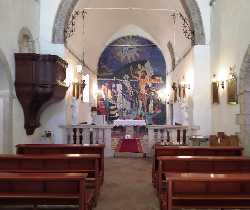
Holy Trinity Church Budva
Church
Holy Trinity Church Budva
 Church
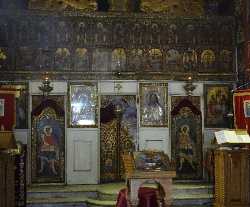
 of Santa Maria in Punta
Church
Church of Santa Maria in Punta
 Church
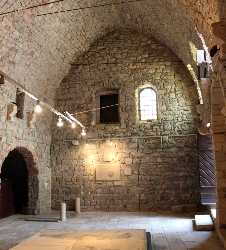
 of St. Sava the Sanctified
Church
Church of St. Sava the Sanctified
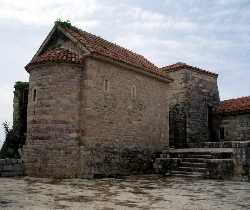 Church
Citadela Budva
Church
Citadela Budva
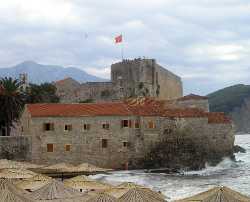 Fortress
Fort Mogren
Fortress
Fort Mogren
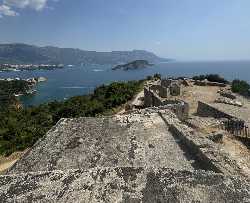 Fortress
Jovo Ivanovic Modern Gallery
Fortress
Jovo Ivanovic Modern Gallery
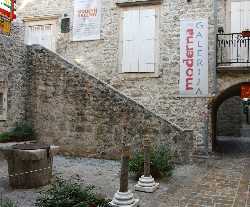 Gallery
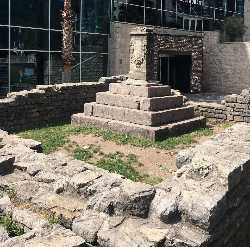
Ruins of Roman-era Necropolis
Gallery
Ruins of Roman-era Necropolis
 Historical Landmark
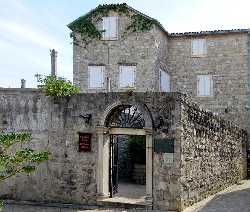
Budva City Museum
Historical Landmark
Budva City Museum
 Museum
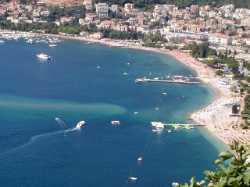
Slovenska Plaža
Museum
Slovenska Plaža
 Tourist attraction