Ruins of Roman-era Necropolis
Ruins of the Roman‑era Necropolis in Budva offer one of the most fascinating archaeological glimpses into the town’s ancient past. Discovered in the 1930s during construction near the Old Town, the necropolis revealed a large burial ground dating from the 1st to 4th centuries AD. Its location beside a major coastal trade route made Budva an important stop for merchants, sailors, and settlers moving across the Adriatic world. What survives today are stone burial structures, exposed foundations, and marked excavation zones that show how Roman communities organised their funerary spaces. The most intriguing finds—now preserved in the city museum—include glass perfume bottles, fine ceramics, bronze jewellery, and amphora fragments, all uncovered here. These objects suggest that Budva’s residents enjoyed strong trade connections and a surprisingly high level of craftsmanship. Walking through the site, visitors can observe clearly outlined grave pits and sections of masonry that hint at more elaborate tombs once standing above ground. Though modest in scale, the necropolis offers a rare chance to stand directly on Roman Budva’s footprint, connecting the modern resort town with its ancient origins.
Budva Montenegro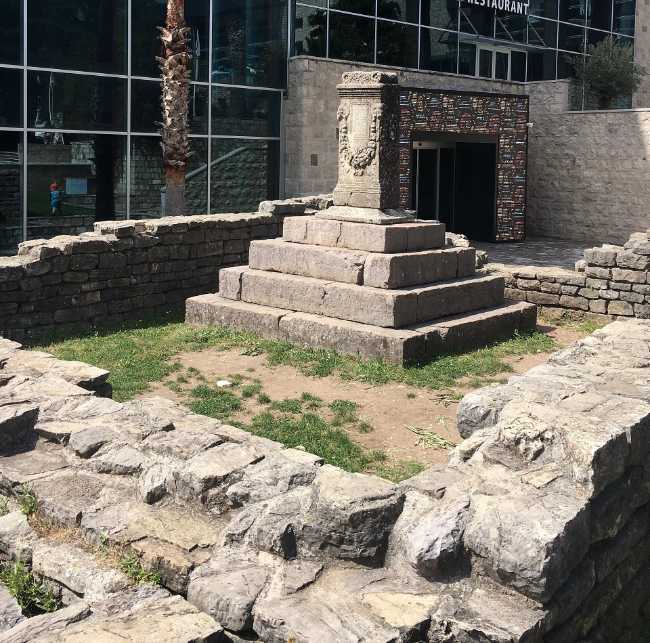
The ruins of the Roman-era necropolis sit just outside the walls of Budva’s Old Town, near the main land gate and the area around Hotel Avala on Mediteranska street. The ancient burial ground was uncovered during construction works in the 1930s and contained graves from both Hellenistic and Roman times. Most of the valuable finds – jewellery, pottery, coins and other objects – are now displayed inside the Budva City Museum, only a short walk away within the Old Town. Just beyond the gate you’ll find the Citadel at the southern tip of the walled town, the Church of St. John the Baptist, the Holy Trinity Church and the narrow medieval streets that make up the historic centre. You can easily combine a look at the remaining visible traces of the necropolis with a stroll through the Old Town, climbing the walls or visiting the museum. Everything is close enough that you can move from the ancient burial site into the fortress, churches and museum without any rush, taking in the layers of history that sit side by side in this compact coastal town.
 Museum
 Gallery
 Fortress
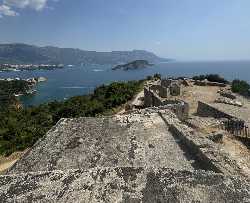 Fortress
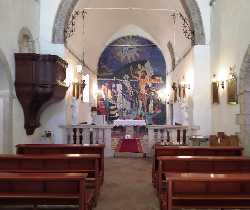 Church
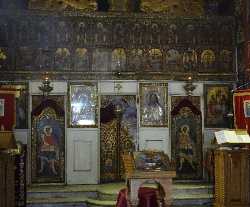 Church
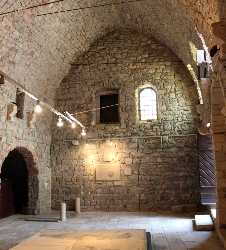 Church
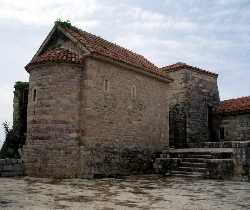 Church
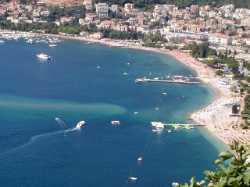 Tourist attraction