Baba Tonka House Museum / Nikola Obretenov House
The Baba Tonka and Nikola Obretenov House Museum is one of Ruse’s most meaningful heritage sites, dedicated to the city’s role in Bulgaria’s national revival and revolutionary movement. The two neighbouring houses belonged to the Obretenov family—deeply involved in the struggle for liberation—and to Baba Tonka, the legendary matriarch who supported and sheltered revolutionaries. Inside Baba Tonka’s house, visitors step into authentic 19th‑century interiors, preserved to reflect the family’s daily life. The rooms display personal belongings, household items, and photographs that reveal how an ordinary home became a centre of clandestine activity. A particularly striking detail is the collection of letters and documents connected to the revolutionary network, showing Baba Tonka’s quiet but decisive role. The Nikola Obretenov House focuses on the life of Nikola Obretenov, a prominent revolutionary who participated in the April Uprising. Exhibits include weapons, uniforms, and maps that trace his movements and missions. The museum also presents original manuscripts and memoirs, offering a rare first‑hand perspective on the era’s political turbulence.
Ruse Bulgaria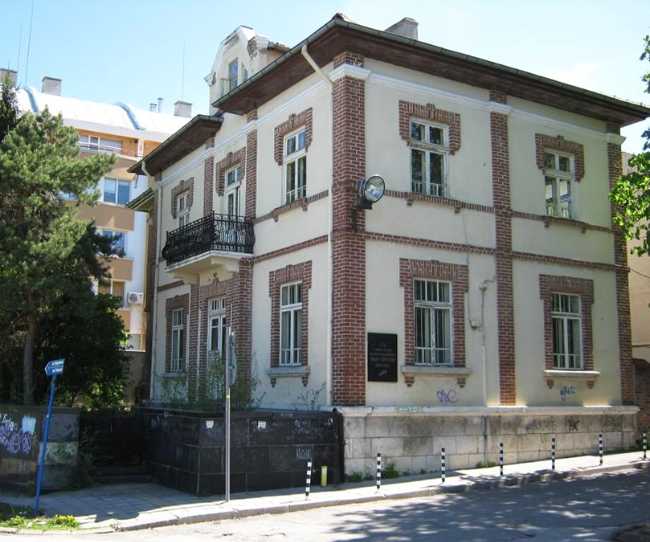
It is located at ul. Baba Tonka 38, 7000 Ruse, Center. The house is in the old part of town, easy to reach on foot from the main squares. It was the family home of Baba Tonka Obretenova, the mother of Bulgarian revolutionaries, and today it shows her life and the life of her son Nikola Obretenov, with authentic furniture, documents and a preserved urban guest room from the 19th century. Because you are in the center, you have a lot around you. Just a few minutes walk away is the Regional Historical Museum on Battenberg Square, housed in the beautiful Battenberg Palace, and the EcoMuseum with Aquarium which holds the largest freshwater aquarium in Bulgaria. Very close is also the Kaliopa House, the Museum of Urban Life on Tsar Ferdinand Street, with elegant rooms and the first grand piano from Vienna. A bit further you reach Freedom Square with the Monument of Liberty, the Opera, the Drama Theatre and the City Garden. Nearby is the Pantheon of National Revival Heroes, where the remains of Baba Tonka herself and other famous revolutionaries are kept, and the Danube river promenade for a nice walk with views to Romania. If you like railway history, the National Museum of Transport and Communications, housed in the first railway station of Bulgaria from 1866, is also not far.
 Museum
EcoMuseum with Aquarium
Museum
EcoMuseum with Aquarium
 Museum
National Museum of Transport and Communications
Museum
National Museum of Transport and Communications
 Museum
Kaliopa House – Museum of Urban Life
Museum
Kaliopa House – Museum of Urban Life
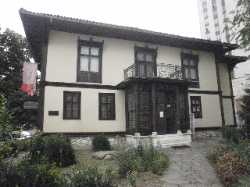 Museum
Zahari Stoyanov House Museum
Museum
Zahari Stoyanov House Museum
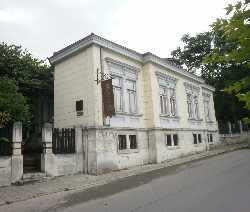 Museum
Sexaginta Prista Roman Fortress
Museum
Sexaginta Prista Roman Fortress
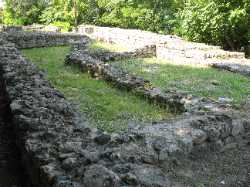 Historical Landmark
Kunt Kapu
Historical Landmark
Kunt Kapu
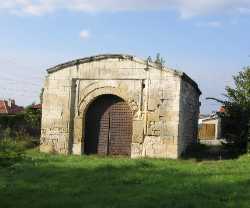 Historical Landmark
Holy Trinity Cathedral Ruse
Historical Landmark
Holy Trinity Cathedral Ruse
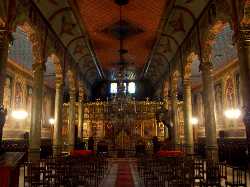 Church
Catholic Church Saint Paul
Church
Catholic Church Saint Paul
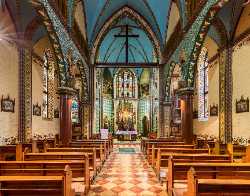 Church
State Opera Ruse
Church
State Opera Ruse
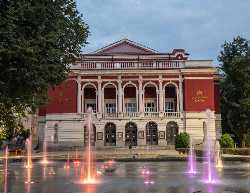 Opera House
State Puppet Theater
Opera House
State Puppet Theater
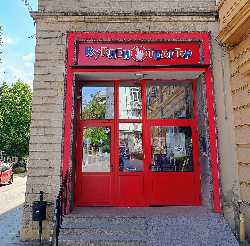 Theatre
Mladezhki Park
Theatre
Mladezhki Park
 Park
Park