Fort Punta Christo
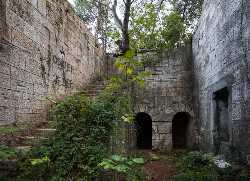
Fort Monte Ghiro is one of the more secluded Austro‑Hungarian forts surrounding Pula, built in the late 19th century as part of the city’s defensive network. Its position on a wooded hill gave it a strategic advantage: from here soldiers could monitor movements across the inland approaches while remaining almost invisible thanks to the fort’s low, earth‑covered profile. This “hidden in plain sight” design was typical of modern coastal defence architecture of the era. Inside, the fort reveals a compact but intriguing layout. Visitors can walk through long, echoing corridors, storage rooms, and partially preserved gun positions. The thick concrete walls and narrow embrasures show how the fort was engineered to withstand heavy artillery. One of the most interesting features is the system of underground passages that once connected ammunition depots with firing platforms, allowing rapid movement during combat. Although Monte Ghiro is not as restored as some of Pula’s other forts, its raw authenticity is part of the charm. Nature has reclaimed parts of the structure, creating a blend of military history and quiet forest atmosphere. Exploring it feels like discovering a forgotten chapter of Pula’s past, where engineering precision meets the slow work of time.
Pula Croatia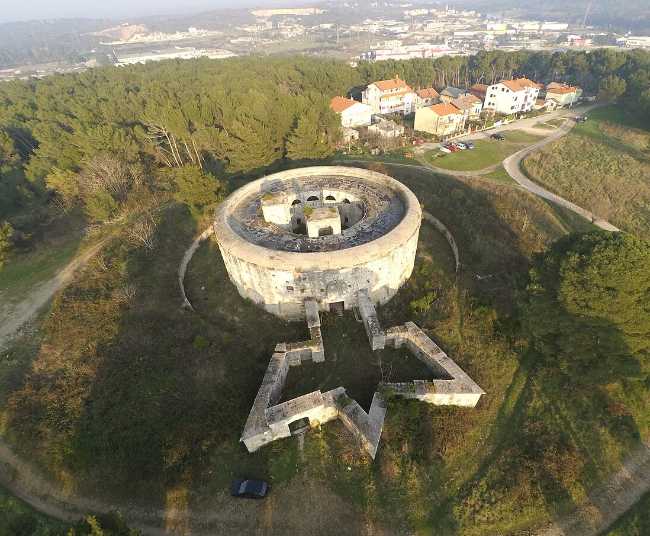
The fort features massive defensive walls, deep trenches cut into the rock, and old barracks buildings that have slowly been reclaimed by wild ivy and pine trees. Wandering through this quiet, atmospheric site feels like stepping back into a forgotten chapter of Europe's military history. The fortress is located on a hilltop in the northeastern part of Pula, sitting right next to the city's main Monte Ghiro cemetery. It is situated away from the coastal resort crowds, embedded in a tranquil, wooded area that gives it a wonderfully secluded and mysterious feel, despite being quite close to residential neighborhoods. Even though it is tucked away from the main tourist hubs, it is very easy to connect a visit here with other city highlights. Just a short drive south brings you into Pula’s vibrant center, where you can marvel at the world-famous Pula Arena, the massive Roman amphitheater that dominates the cityscape. If you head slightly west from the fort, you will reach the Roman Theater and the Pula Citadel, which watches over the harbor. Additionally, the fort is well-positioned for anyone wanting to visit the nearby dynamic local markets or catch a quick local bus to the scenic northern beaches of Štinjan.
 Museum
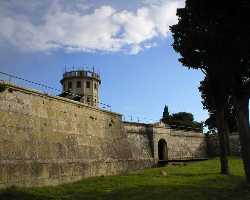
Archaeological Museum of Istria
Museum
Archaeological Museum of Istria
 Museum
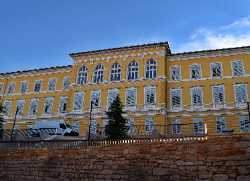
 of Contemporary Art of Istria
Museum
Museum of Contemporary Art of Istria
 Museum
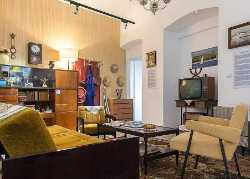
Istria Wine Museum
Museum
Istria Wine Museum
 Museum
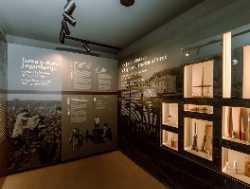
Agrippina's House
Museum
Agrippina's House
 Museum
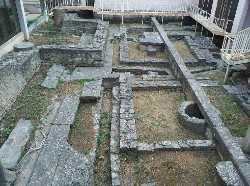
Temple of Augustus Collection
Museum
Temple of Augustus Collection
 Historical Landmark
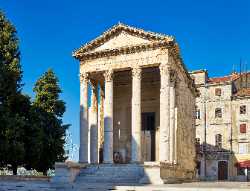
Pula Citadel
Historical Landmark
Pula Citadel
 Fortress
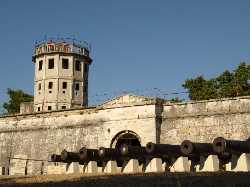
Fort Valmaggiore
Fortress
Fort Valmaggiore
 Fortress
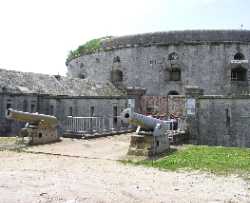
Fort Bourguignon
Fortress
Fort Bourguignon
 Fortress
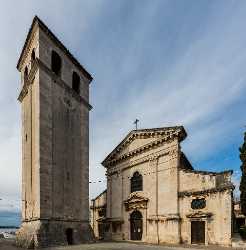
Cathedral of the Assumption of the Blessed Virgin Mary Pula
Fortress
Cathedral of the Assumption of the Blessed Virgin Mary Pula
 Cathedral
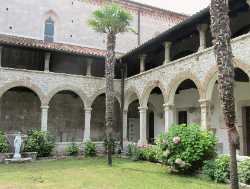
Church of St. Francis Pula
Cathedral
Church of St. Francis Pula
 Church
Istrian National Theatre
Church
Istrian National Theatre
 Theatre
Naval Observatory
Theatre
Naval Observatory
 Observatory