Archaeological Museum of Istria
The Archaeological Museum of Istria is one of Pula’s most important cultural institutions, tracing the region’s history from prehistory to late antiquity. Founded in 1902, it originally served as a repository for artefacts uncovered during the city’s rapid archaeological discoveries, especially around the Roman Forum and the Amphitheatre. Today, it offers a compact yet remarkably rich overview of Istria’s ancient past. One of the most interesting facts is that many of the museum’s Roman sculptures and inscriptions were found in situ, reused in medieval houses or buried beneath modern streets. This gives the collection a strong sense of authenticity. The lapidarium, housed in the former monastery cloister, is a highlight: rows of carved altars, tombstones, and reliefs reveal the daily life, professions, and beliefs of Roman citizens. Inside, visitors can explore displays of prehistoric pottery, jewellery, and tools from the Histri—an Iron Age people known for their hillfort settlements and distinctive geometric designs. The Roman section includes mosaics, glassware, and household objects that show how refined urban life was in ancient Pula.
Pula Croatia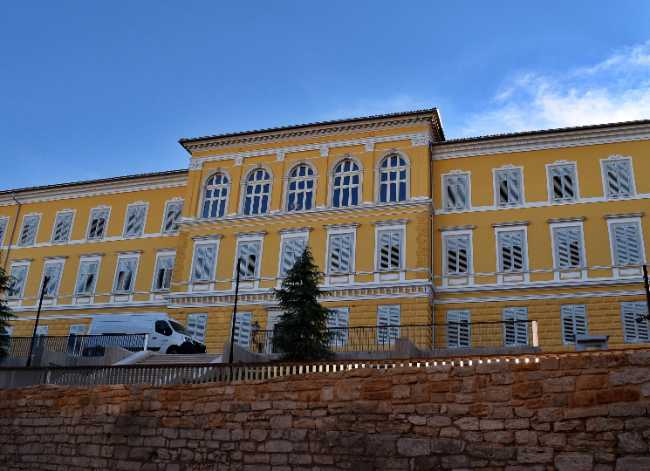
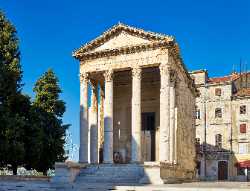
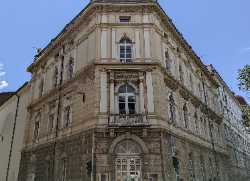
The Archaeological Museum of Istria is located in the heart of Pula's historic old town, just a short walk from the Forum square. It is housed in a former Austrian gymnasium and surrounded by a small park where you can already see ancient stone monuments and Roman fragments in the open air. The museum holds a rich collection that tells the story of Istria from prehistoric times through antiquity to the Middle Ages, with many finds from Pula's Roman period. Its central position makes it ideal for sightseeing. Right nearby is the famous Temple of Augustus on the Forum, one of the best preserved Roman temples in Croatia, and the beautiful Town Hall. Just a few steps away you will find the Arch of the Sergii, the monumental Roman city gate, and the lively main streets full of shops and cafes. From the museum you can easily walk to Pula's most famous landmark, the Pula Arena, one of the largest and best preserved Roman amphitheatres in the world, only about ten minutes away. On the hill above the old town is the Venetian fortress with the Historical and Maritime Museum of Istria and a great panoramic view over the harbour. The Twin Gates, the Gate of Hercules and the waterfront promenade are also close by.
 Museum
 of Contemporary Art of Istria
Museum
Museum of Contemporary Art of Istria
 Museum
Istria Wine Museum
Museum
Istria Wine Museum
 Museum
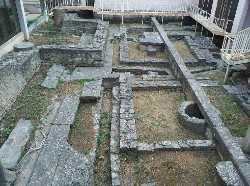
Agrippina's House
Museum
Agrippina's House
 Museum
Temple of Augustus Collection
Museum
Temple of Augustus Collection
 Historical Landmark
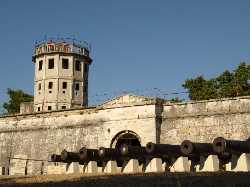
Pula Citadel
Historical Landmark
Pula Citadel
 Fortress
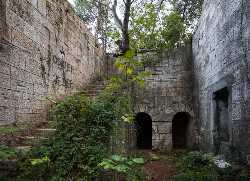
Fort Valmaggiore
Fortress
Fort Valmaggiore
 Fortress
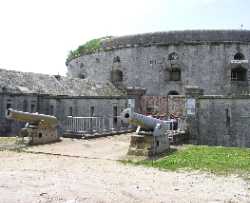
Fort Bourguignon
Fortress
Fort Bourguignon
 Fortress
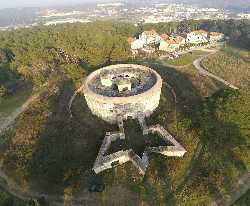
Fort Punta Christo
Fortress
Fort Punta Christo
 Fortress
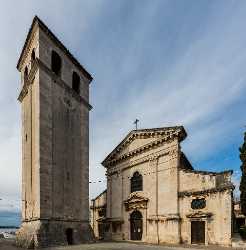
Cathedral of the Assumption of the Blessed Virgin Mary Pula
Fortress
Cathedral of the Assumption of the Blessed Virgin Mary Pula
 Cathedral
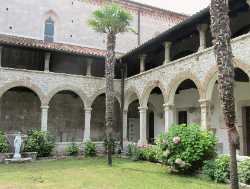
Church of St. Francis Pula
Cathedral
Church of St. Francis Pula
 Church
Istrian National Theatre
Church
Istrian National Theatre
 Theatre
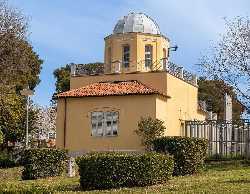
Naval Observatory
Theatre
Naval Observatory
 Observatory