Agrippina's House
Agrippina’s House in Pula is one of the city’s most intriguing archaeological fragments: a Roman domus identified by a finely carved female statue believed to depict Agrippina the Younger, mother of Emperor Nero. Though only foundations and partial walls survive, the site offers a rare glimpse into elite domestic life in a prosperous Adriatic port. Inside the preserved area, visitors can see remnants of the central courtyard and traces of mosaic flooring that once decorated reception rooms. The statue itself is the highlight — a graceful marble figure with detailed drapery, discovered during 19th‑century excavations and now displayed nearby. Its presence suggests the house belonged to a wealthy family closely aligned with imperial culture. What makes the site especially compelling is its location within Pula’s layered Roman quarter. Agrippina’s House stands just steps from the Forum and the Temple of Augustus, forming part of a walkable cluster of monuments that reveal how public and private spaces intertwined in antiquity. Even in its fragmentary state, the house invites visitors to imagine dinners, political conversations, and daily rituals unfolding behind its once‑grand façade.
Pula Croatia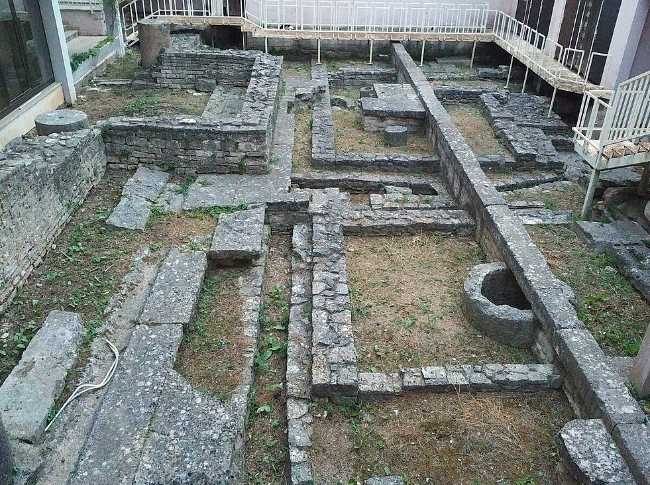
Agrippina's House is a fascinating archaeological site located in the heart of Pula's historic Old Town, Croatia. The remains stand close to the city's ancient Roman forum, offering visitors a glimpse into everyday life during the Roman Empire. The house is named after Agrippina, although there is no definitive evidence linking the property to the famous Roman noblewoman. The site reflects Pula's importance as a prosperous Roman settlement, known in antiquity as Colonia Pietas Iulia Pola. Walking through the remains allows visitors to imagine the city's rich past while appreciating the careful archaeological preservation that has uncovered centuries of history beneath the modern streets. Agrippina's House is ideally situated for exploring many of Pula's most famous attractions. Just a short walk away is the impressive Pula Arena, one of the world's best-preserved Roman amphitheatres. Nearby, visitors can explore the Temple of Augustus, the Arch of the Sergii, the Roman Forum, and the Twin Gates, all showcasing the city's remarkable Roman heritage. The Archaeological Museum of Istria is also within easy walking distance, displaying artifacts discovered throughout the region.
 Museum
Archaeological Museum of Istria
Museum
Archaeological Museum of Istria
 Museum
 of Contemporary Art of Istria
Museum
Museum of Contemporary Art of Istria
 Museum
Istria Wine Museum
Museum
Istria Wine Museum
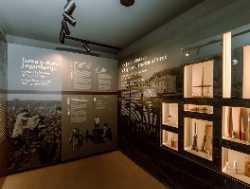 Museum
Temple of Augustus Collection
Museum
Temple of Augustus Collection
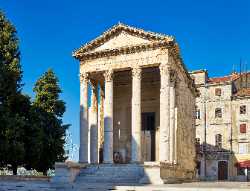 Historical Landmark
Pula Citadel
Historical Landmark
Pula Citadel
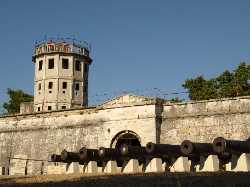 Fortress
Fort Valmaggiore
Fortress
Fort Valmaggiore
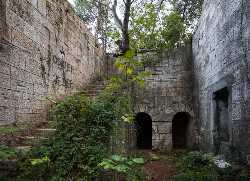 Fortress
Fort Bourguignon
Fortress
Fort Bourguignon
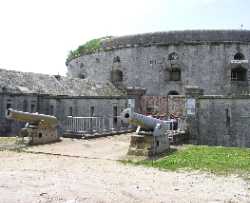 Fortress
Fort Punta Christo
Fortress
Fort Punta Christo
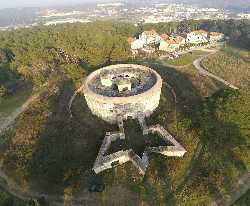 Fortress
Cathedral of the Assumption of the Blessed Virgin Mary Pula
Fortress
Cathedral of the Assumption of the Blessed Virgin Mary Pula
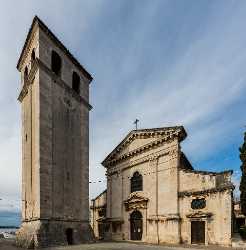 Cathedral
Church of St. Francis Pula
Cathedral
Church of St. Francis Pula
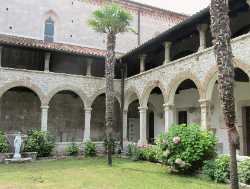 Church
Istrian National Theatre
Church
Istrian National Theatre
 Theatre
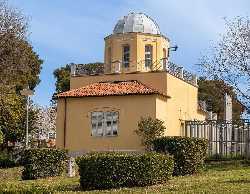
Naval Observatory
Theatre
Naval Observatory
 Observatory