Durrës city wall
Durrës City Wall is one of the most atmospheric remnants of the ancient city of Dyrrachium, a fortification that has survived Roman engineers, Byzantine rebuilds, and Ottoman reinforcements. Walking along its stones feels like tracing the city’s defensive heartbeat across two millennia. Much of what stands today dates to the late Roman and early Byzantine periods, when Durrës was a crucial Adriatic stronghold. One of the most interesting facts is the wall’s resilience. It famously withstood several major earthquakes, including the devastating 1273 quake, after which it was rebuilt with even stronger masonry. The surviving sections reveal layers of construction—Roman brickwork, Byzantine repairs, and later Ottoman additions—each telling a chapter of the city’s turbulent past. Inside the accessible areas, visitors can explore tower remains that once housed guards and signal posts. Some stretches still show Roman opus mixtum, the distinctive pattern of alternating brick and stone. Nearby, fragments of gates and passages hint at how people once moved between the fortified city and the bustling port.
Durrës Albania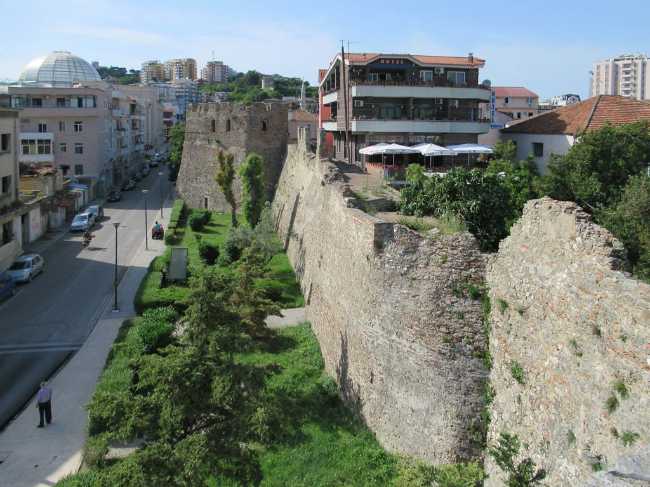
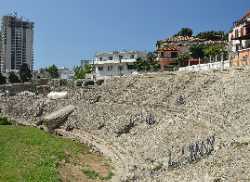
The city wall of Durrës is one of the oldest and most impressive remains of the ancient city, stretching through the historic center. You will find it around Rruga Kalase and Rruga Taulantia, Durrës. Locals also call it the Byzantine city walls or Durrës Castle walls. It was first built by the Byzantines in the early centuries and later reinforced by the Venetians and Ottomans. Today you can still walk along parts of it and see the old towers, especially Tower C which is the most photographed. Since the wall goes around the old town, you are close to everything. Right inside the walls is the Durrës Amphitheatre, the biggest Roman amphitheatre in the Balkans and the city's main landmark. Next to it you have the Archaeological Museum on Rruga Taulantia, the biggest in Albania, with finds from ancient Dyrrhachium. In the same area you also have the Byzantine Forum, the Roman Baths, the small Peeping Tourist Museum and the Ethnographic Museum in the Aleksandër Moisiu House. For a walk, the Vollga seafront promenade with cafes and restaurants is just a few minutes away, and you can also visit the Venetian Tower at the old entrance to the city.
 Museum
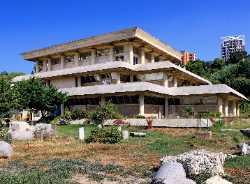
Ethnographic Museum of Durrës
Museum
Ethnographic Museum of Durrës
 Museum
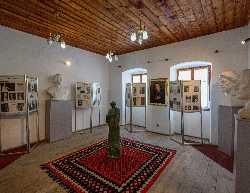
Peeping Tourist Museum
Museum
Peeping Tourist Museum
 Museum
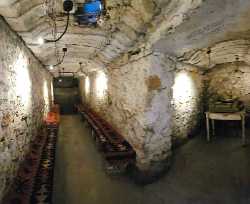
MuZEH Lab
Museum
MuZEH Lab
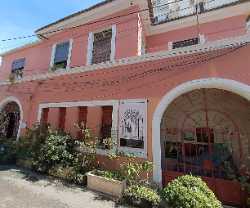 Museum
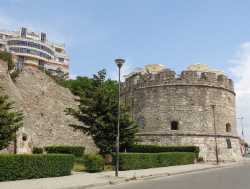
Venetian Tower of Durrës
Museum
Venetian Tower of Durrës
 Historical Landmark
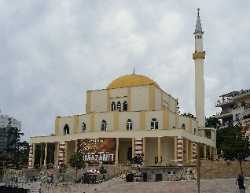
Xhamia e Madhe
Historical Landmark
Xhamia e Madhe
 Mosque
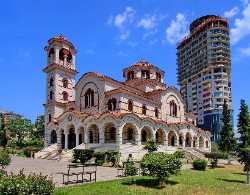
Cathedral of St Paul and St Asti
Mosque
Cathedral of St Paul and St Asti
 Cathedral
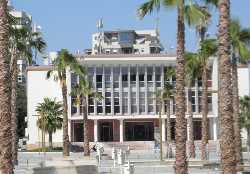
Aleksandër Moisiu Theatre
Cathedral
Aleksandër Moisiu Theatre
 Theatre
Durrës Amphitheatre
Theatre
Durrës Amphitheatre
 Historical Landmark
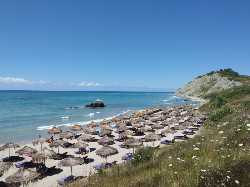
Durrës Beach
Historical Landmark
Durrës Beach
 Tourist attraction