Muzeul Județean de Istorie Brașov
Muzeul Județean de Istorie Brașov is housed in the elegant former town hall on Piața Sfatului, making it one of the city’s most atmospheric cultural landmarks. Its collection traces Brașov’s story from medieval trade hub to modern Transylvanian centre, with a focus on everyday life, craftsmanship, and the city’s role along historic commercial routes. The museum’s charm lies in how it blends local identity with broader regional history. Inside, visitors can explore medieval guild artefacts—tools, seals, and ceremonial objects that reveal the power of Brașov’s craftsmen. The exhibition on Saxon heritage is particularly engaging, showing how German settlers shaped architecture, education, and urban organisation. Coins, weapons, and trade documents illustrate the city’s strategic position between Wallachia, Moldavia, and Central Europe. One of the most interesting features is the section dedicated to Brașov’s printing tradition. The museum displays early books and printing equipment connected to Diaconul Coresi, whose work helped spread Romanian language texts in the 16th century. Another highlight is the collection of traditional costumes from surrounding villages, showcasing intricate embroidery and regional symbolism.
Brașov Romania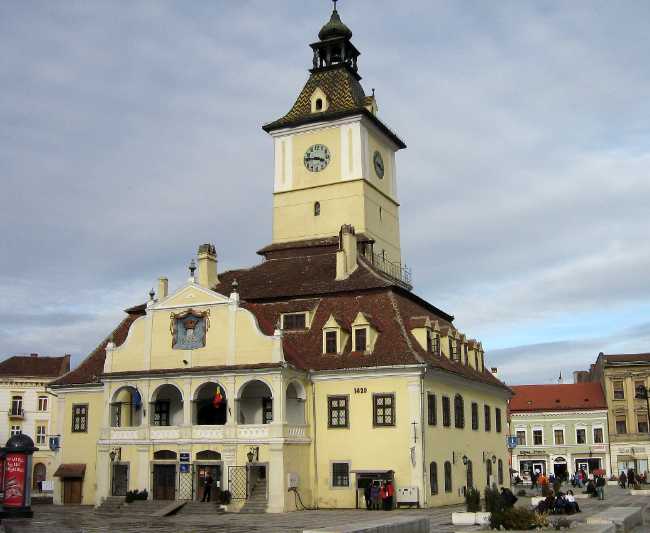
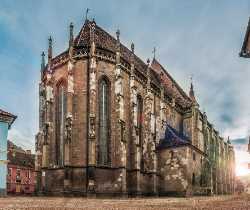
Muzeul Județean de Istorie Brașov, the Brașov County History Museum, is located in Piața Sfatului, the Council Square, right in the center of Brașov’s Old Town. It occupies the former Council House, a 15th-century building with a distinctive tower that once served as the city’s administrative seat. The museum covers Brașov’s history from prehistoric times to the modern era, with archaeology, medieval guilds, and exhibits on the 1987 anti-communist uprising. The tower offers a view over the square and the surrounding red roofs. Step outside and you’re in Piața Sfatului, the heart of the Old Town. The square is lined with pastel 18th-century merchant houses, cafes, and terraces. In winter it hosts the Christmas market, and in summer it’s full of open-air events. The Black Church, Biserica Neagră, is 1 minute away. It’s the largest Gothic church in Romania, famous for its 6,000-pipe organ and collection of Anatolian carpets. Walk 3 minutes to Strada Sforii, one of the narrowest streets in Europe, just over one meter wide. From there, head to the old city walls and towers: the White Tower and Black Tower sit on the hillside and give great views over the Old Town. The First Romanian School Museum and St. Nicholas Church are 10 minutes away in the Șchei district, with centuries-old books and frescoes. For a panorama, take the cable car from near the square up to Mount Tâmpa. The large Brașov sign is at the top, with trails and views over the city.
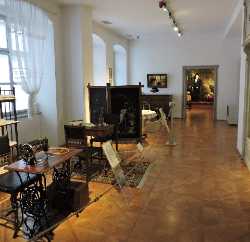 Museum
Muzeul de Artă Brașov
Museum
Muzeul de Artă Brașov
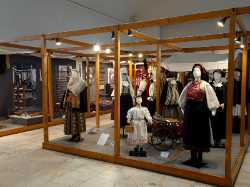 Museum
Muzeul de Etnografie Brașov
Museum
Muzeul de Etnografie Brașov
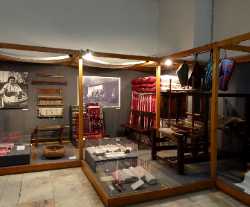 Museum
Casa Mureșenilor Museum
Museum
Casa Mureșenilor Museum
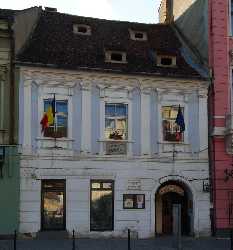 Museum
The First Romanian School Museum
Museum
The First Romanian School Museum
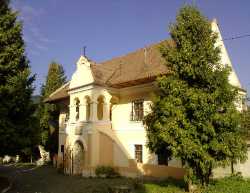 Museum
Graft Bastion
Museum
Graft Bastion
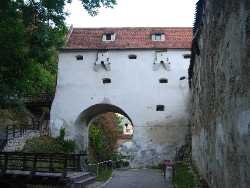 Historical Landmark
Olimpia-Muzeul Sportului și Turismului Montan
Historical Landmark
Olimpia-Muzeul Sportului și Turismului Montan
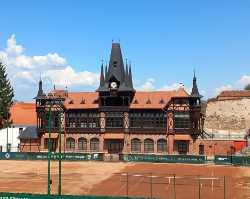 Museum
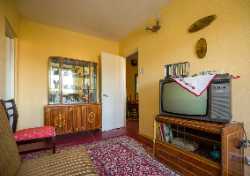
Tales of Communism Museum
Museum
Tales of Communism Museum
 Museum
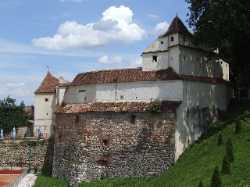
Weavers Bastion
Museum
Weavers Bastion
 Fortress
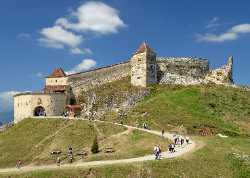
The Fortress on the Watchtower
Fortress
The Fortress on the Watchtower
 Fortress
Black Church
Fortress
Black Church
 Church
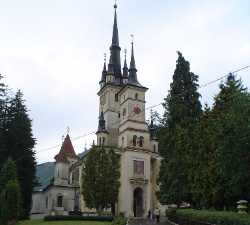
Saint Nicholas Church
Church
Saint Nicholas Church
 Church
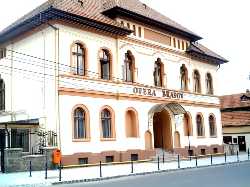
Opera Brașov
Church
Opera Brașov
 Opera House
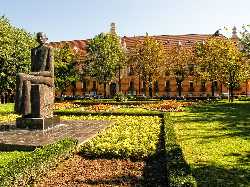
Nicolae Titulescu Park
Opera House
Nicolae Titulescu Park
 Park
Park