The First Romanian School Museum
The First Romanian School Museum in Brașov is a cornerstone of Romanian cultural history, located in the courtyard of St. Nicholas Church in Șcheii Brașovului. It occupies the very building where, in the 16th century, the first classes in Romanian were taught—an extraordinary milestone in a region long dominated by Latin, Church Slavonic, and Hungarian texts. The museum preserves this legacy with an atmosphere that feels both scholarly and intimate. Inside, visitors can see the first Romanian textbooks, early grammar manuals, and religious books printed by Diaconul Coresi, whose pioneering work helped standardise Romanian writing. The original classroom is one of the museum’s most captivating spaces: wooden benches, ink pots, and teaching tools recreate the environment where generations of students learned to read and write. Another highlight is the old printing press, a robust, beautifully preserved machine that illustrates how books were produced in the 16th and 17th centuries. Manuscripts, maps, and rare documents reveal how education shaped community identity in Șcheii Brașovului, a neighbourhood known for preserving Romanian traditions during periods of cultural pressure.
Brașov Romania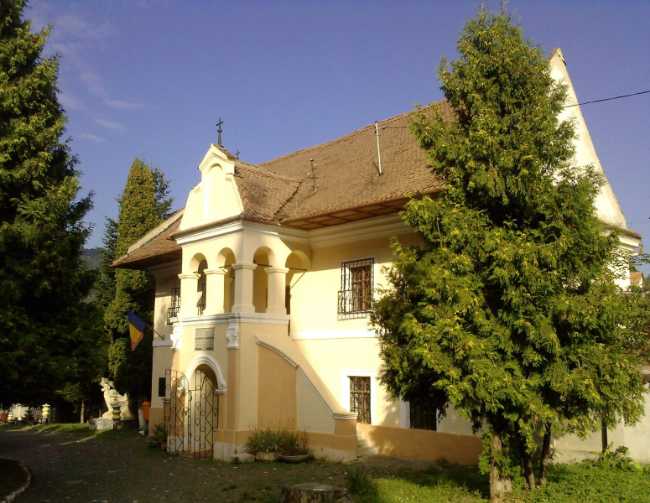
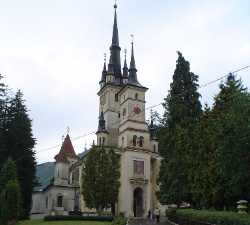
The First Romanian School Museum is in the Șchei district at Piața Unirii 2-3, next to St. Nicholas Church. It’s housed in the original 1495 building where the first Romanian-language school functioned in Brașov. The museum displays rare 16th- and 17th-century books, the first Romanian Bible from 1688, old printing presses, and the desk of deacon Coresi who printed the first books in Romanian. You can see Slavonic manuscripts, old classrooms, and frescoes in the adjacent church courtyard. St. Nicholas Church is in the same courtyard. Built from the 14th century onward, it mixes Gothic, Baroque, and Byzantine styles and was a cultural center for Romanians in Transylvania. Walk 10 minutes through Șchei’s narrow streets to Catherine’s Gate, the only original medieval city gate left. Right next to it is Schei Gate, built in 1827. Both mark the entrance to Brașov’s Old Town. Piața Sfatului, the main Council Square, is 12 minutes away. It’s surrounded by pastel houses, cafes, and the Council House tower. The Black Church dominates one side of the square and is the largest Gothic church in Romania, known for its oriental carpet collection and organ concerts. From the square, walk to Strada Sforii, one of Europe’s narrowest streets. The Black Tower and White Tower are 15 minutes uphill and give views over the red roofs.
 Museum
Muzeul Civilizației Urbane
Museum
Muzeul Civilizației Urbane
 Museum
Muzeul de Artă Brașov
Museum
Muzeul de Artă Brașov
 Museum
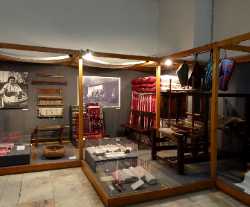
Muzeul de Etnografie Brașov
Museum
Muzeul de Etnografie Brașov
 Museum
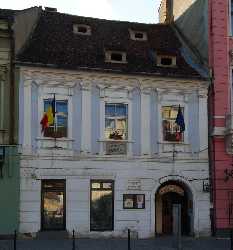
Casa Mureșenilor Museum
Museum
Casa Mureșenilor Museum
 Museum
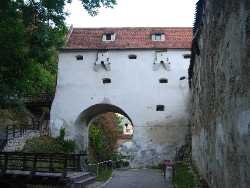
Graft Bastion
Museum
Graft Bastion
 Historical Landmark
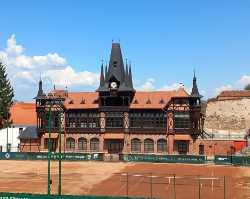
Olimpia-Muzeul Sportului și Turismului Montan
Historical Landmark
Olimpia-Muzeul Sportului și Turismului Montan
 Museum
Tales of Communism Museum
Museum
Tales of Communism Museum
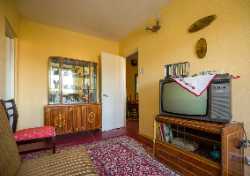 Museum
Weavers Bastion
Museum
Weavers Bastion
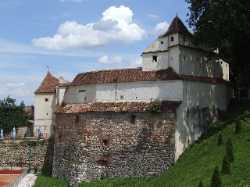 Fortress
The Fortress on the Watchtower
Fortress
The Fortress on the Watchtower
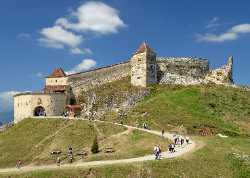 Fortress
Black Church
Fortress
Black Church
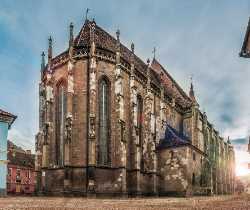 Church
Saint Nicholas Church
Church
Saint Nicholas Church
 Church
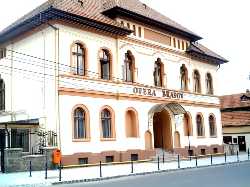
Opera Brașov
Church
Opera Brașov
 Opera House
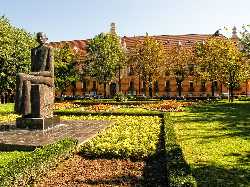
Nicolae Titulescu Park
Opera House
Nicolae Titulescu Park
 Park
Park