Sedlec Ossuary
Sedlec Ossuary is one of Europe’s most haunting and unforgettable sacred spaces, a small chapel decorated with the bones of an estimated 40,000 to 70,000 people. Its origins lie in the 13th century, when the abbot of Sedlec returned from Jerusalem with soil from Golgotha and sprinkled it over the local cemetery, making it one of the most desired burial grounds in Central Europe. After centuries of plague and war, the cemetery became overcrowded, and in the 16th century the bones were exhumed and stored in the chapel. Inside, the ossuary transforms human remains into striking works of art. The chandelier, containing at least one of every bone in the human body, hangs at the centre like a macabre jewel. Bone pyramids rise in each corner, while garlands, monstrances, and even a Schwarzenberg family coat of arms are crafted entirely from skulls and femurs. Despite its eerie appearance, the space conveys a message of humility and the transience of life, echoing medieval memento mori traditions.
Kutná Hora Czech Republic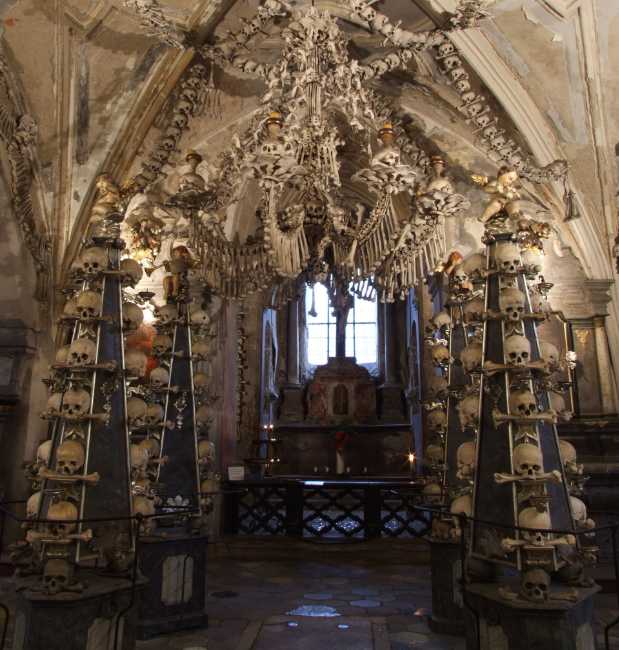
The Sedlec Ossuary, commonly known as the “Bone Church,” is located in Sedlec, a suburb about 1.6 kilometres north-east of Kutná Hora’s historic centre in central Bohemia, Czech Republic. The ossuary is a small Roman Catholic chapel situated beneath the Cemetery Church of All Saints, which was originally part of the former Sedlec Abbey, the oldest Cistercian monastery in Bohemia. Inside this Gothic chapel, roughly 40,000 human bones have been artistically arranged to decorate the interior. Bone chandeliers hang from the vaulted ceiling, including a massive central chandelier made from at least one of every bone in the human body, while pyramids of skulls line the walls and a large wooden coat of arms caused by the Schwarzenberg family is also made from bones. Directly across the street from the ossuary is the Cathedral of the Assumption of Our Lady and St. John the Baptist, a UNESCO-listed Gothic cathedral within the same Sedlec monastery complex. Both attractions are often visited together using a combination ticket. Within easy walking distance or a short bus ride lies Kutná Hora’s historic centre, home to the famous St. Barbara’s Cathedral, the Italian Court (the former royal mint), the Stone House, the Czech Museum of Silver, and the medieval silver mine tours that let visitors explore the underground tunnels where miners once worked.
 Museum
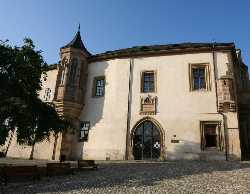
Stone House
Museum
Stone House
 Museum
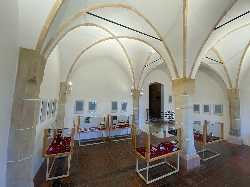
Italian Court Kutna Hora
Museum
Italian Court Kutna Hora
 Historical Landmark
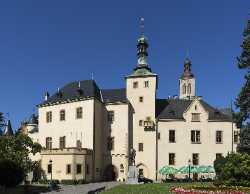
St. Barbara's Church
Historical Landmark
St. Barbara's Church
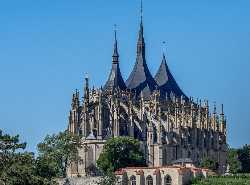 Church
Cathedral of Assumption of Our Lady and St. John the Baptist
Church
Cathedral of Assumption of Our Lady and St. John the Baptist
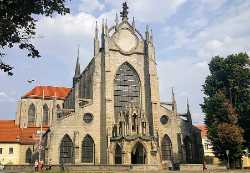 Church
Corpus Christi Chapel
Church
Corpus Christi Chapel
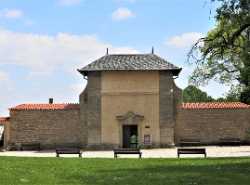 Historical Landmark
Church of St. James Kutna Hora
Historical Landmark
Church of St. James Kutna Hora
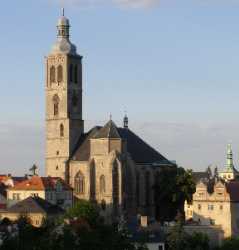 Church
 of St. John of Nepomuk
Church
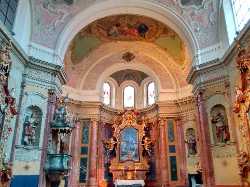
Church of St. John of Nepomuk
 Church
Convent Church of the Sacred Heart of Jesus
Church
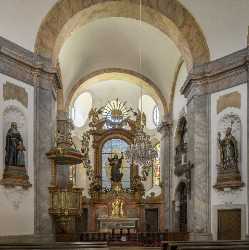
Convent Church of the Sacred Heart of Jesus
 Church
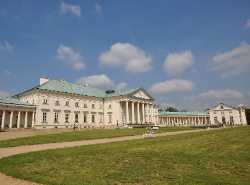
Kačina
Church
Kačina
 Palace
Breuer Gardens
Palace
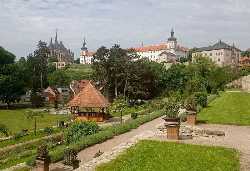
Breuer Gardens
 Park
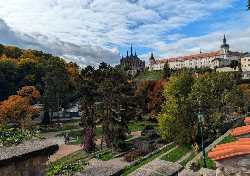
Park under Vlašský Dvůr
Park
Park under Vlašský Dvůr
 Park
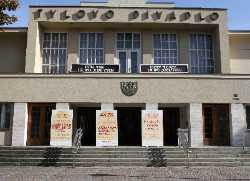
Tyl Theatre
Park
Tyl Theatre
 Theatre